Introduction
These days, we seem to be drowning in coaches, mentors, and assorted “guides to a better you.” A whole ecosystem of pseudo-professionals, buzzing like a broken neon sign. Some of them preach to the masses that, with their help, you’ll earn ten times more, sleep twice as well, and possibly even chew with more confidence.
Let’s set one thing straight from the beginning: anyone who guarantees you any sort of medium-term success in education (and yes, I’m placing mentorship squarely in that category) is, by definition, a fraud. Not necessarily a financial one - no, no. Think of the gray gentlemen from those “bury-your-time-here” enterprises: they won’t steal your wallet, they’ll steal your hours and leave you emotionally barefoot.
Mentorship, in its honest form, is a hand-crafted product of human thought, stubbornness, and imagination. Not mass-market, not stamped on an assembly line, but something made by hand and heart. And as with any handmade good, the quality… varies. One mentor is “so-so, keep the change,” another is “quite decent actually,” and the third doesn’t shine like gold at all - but somehow works better than the one that does.
And in this little tale, I’d like to explain how I myself wandered into this trade of meaning-making
- to show you what’s happening with mentorship today, in my wholly subjective yet painfully honest view, both in the dark times we’ve lived through and the ones that are knocking on the door.
Personal Experience (IT2School)
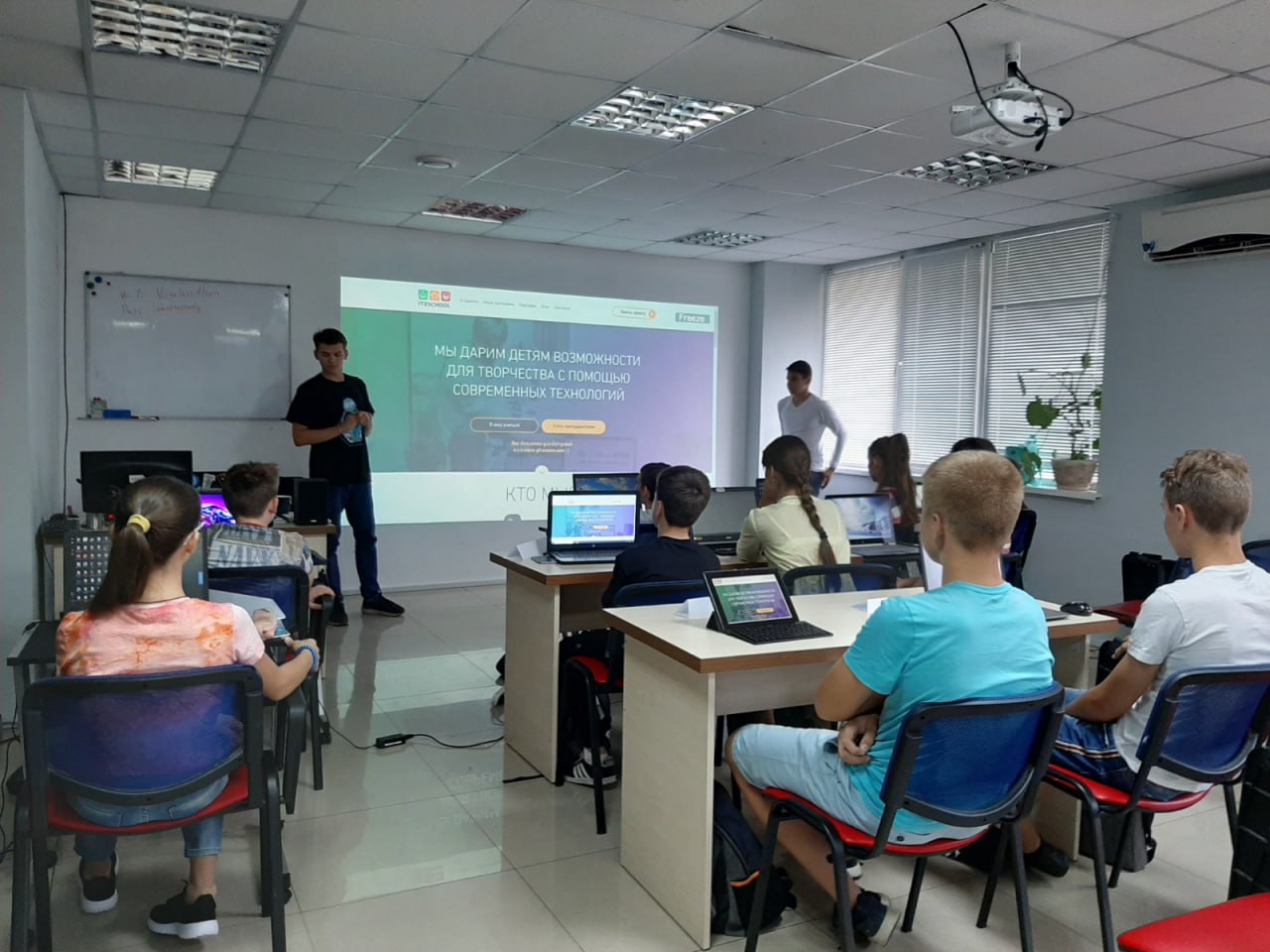
My grand entrance into the IT world began on one particularly frosty October day back in 2016. A group of tech folks - real engineers from real companies in Odessa - had come together to form a nonprofit called IT2School. And somehow I ended up in the group run by Ihor and Vadym inside the Ciklum office.
People love to say that first impressions matter. For once, I agree. Everything there felt… modern. Un-Soviet. Un-dusty. The kind of atmosphere that immediately tilts your inner compass a few degrees toward possibility. Total strangers welcomed me into the holy of holies, and not only that - they wanted to teach me something. For free.
At fourteen, I was, to put it mildly, a kid. Yet even then, I felt - no, I sensed down to the bones
- that I had suddenly landed on an orbit reserved for non-random people, and chances like this don’t usually come in pairs.
Now, to be fair, Vadym and Ihor did not exactly win the mentorship lottery with us. We were… enthusiastic, yes, but not what you’d call “low-effort material.” And still, through countless analogies - some elegant, some hilariously improvised - they managed to teach us things we had no business understanding at that age. Python naturally became the language of choice, a reasonable compromise between abstraction, complexity, and conceptual sanity.
A year and a half later - maybe even less - we were already presenting our humble little Python creations. Awkward, crooked, but honest IT contraptions that contrasted so sharply with the gray, joyless school curriculum that it felt like stepping from a basement into a ballroom. We defended our projects in big halls, side by side with teams from other companies, all led by their own mentors - all part of the same growing community.
Let me underline this once more: hundreds of people, dozens of mentors, professionals from real companies, all teaching for free. No financial incentives, no hidden agendas - a phenomenon that should not exist in any “sane” world, yet somehow blossomed exactly where no one expected it. Most of the students were around fourteen - hence the name “IT2School”.
Eventually it all grew into a space called «Atom Space», where the community expanded into universities and scooped up students like a rising tide. But, as the classics say, that’s a story for another time.
The Philosophy of Mentorship and Its Roots

Mentorship, despite what the startup crowd likes to believe, is not some dazzling invention of the 21st century. It’s a timeless social technology, the very mechanism that kept human civilization from turning into a long, unbroken line of people reinventing the wheel badly. Long before standardized education arrived with its paperwork and its migraines, mentorship ensured that the wisdom of one generation didn’t fall through the cracks on the way to the next.
Modern mentorship, of course, has been rolled onto digital rails and neatly packaged into a sort of educational conveyor belt. Efficiency! Scalability! KPIs! All very impressive - and occasionally even useful - but the soul of the thing is older than any business slide deck.
At its heart, mentorship is not just a “watch and learn” arrangement. It’s a relationship - the kind where the mentor inevitably worries (within reasonable limits, let’s not romanticise) about the successes and failures of the person they’re guiding. There’s investment, emotional bandwidth, and yes, a little human drama. Without this, it’s not mentorship; it’s YouTube.
Naturally, the greatest cultural hits of mentorship come to mind - think Socrates and Plato, where the teacher managed not only to transmit ideas but an entire method of thinking: how to analyze, how to question, how to look at reality without immediately running away from it. Among the not-so-ancient figures we have people like Élie Metchnikoff or Louis Pasteur - giants whose students weren’t merely “students,” but companions in thought, trusted minds with whom they could share bread and meaning over an honest conversation, without any ceremonial nonsense.
And in most real cases, the true philosophy of mentorship is a blend of altruism and pragmatism. Take the Hippocratic Oath - humanity’s oldest formal acknowledgment of the “master–apprentice” relationship, binding the passing on of knowledge to the passing on of ethics. A doctor in those ancient Hippocratic days swore to teach the craft freely to his mentor’s children - a surprisingly touching line item in a document otherwise mostly concerned with not poisoning anyone.
My Philosophy of Mentorship
For me, mentorship is a long-term, strategic investment in mutual growth - not a charity project, not a vanity exercise, and certainly not a shortcut to anything. At its foundation lies a very old, very stubborn principle: a mix of altruism and genuine human connection. My goal isn’t merely to pass along whatever experience life has knocked into me, but to help a talented person find their trajectory faster - to sidestep the standard potholes, the glamorous traps, the heroic mistakes that look great in memoirs but are disastrous in real time.
And in all of this, I quietly hope to gain not just a student, but eventually a colleague - maybe even a friend - someone with whom I can speak as an equal, argue without theatrics, and build something that outlives our individual résumés.
But mentorship isn’t only about giving. Oh no. It’s also one of the most powerful tools for self-improvement I’ve ever encountered. The constant need to structure your knowledge, respond to unexpected questions, and understand a problem through the eyes of someone who hasn’t yet been traumatized by experience - all of this forces you to keep your own expertise sharp. Rust is not an option.
And when your mentee succeeds - when they achieve something real, something earned - it becomes the clearest, most honest validation of your own professionalism. Their growth feeds back into the development of the community, strengthens your reputation, and quietly expands your network with people who may one day change the landscape altogether.
It’s a virtuous cycle: you give, you grow, they grow, the world improves by half a percent - which, let’s be honest, is already a miracle.
The “Student-to-Students” Format
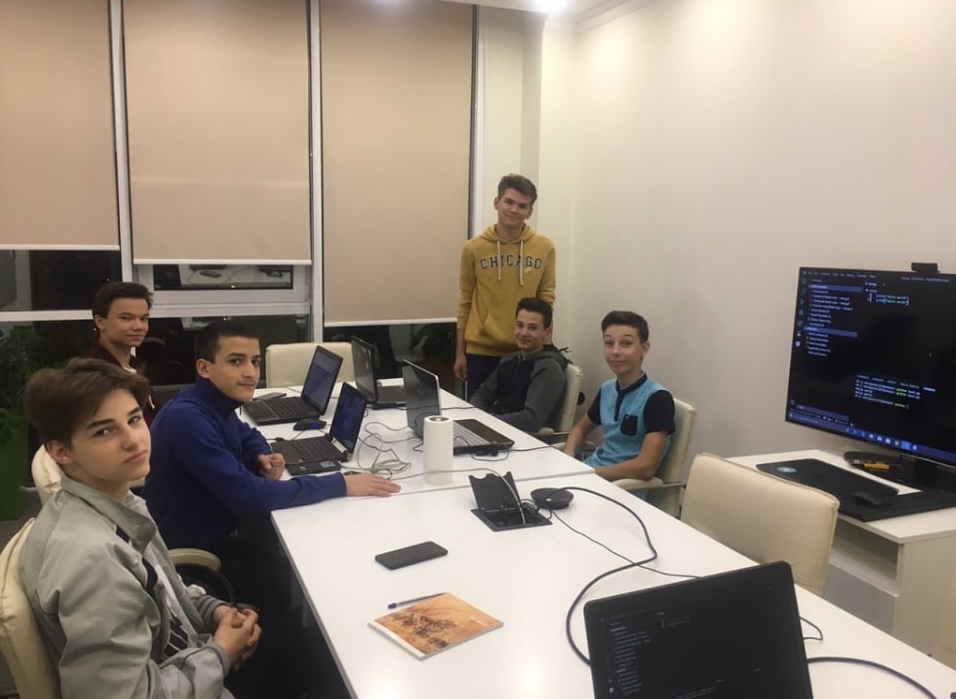
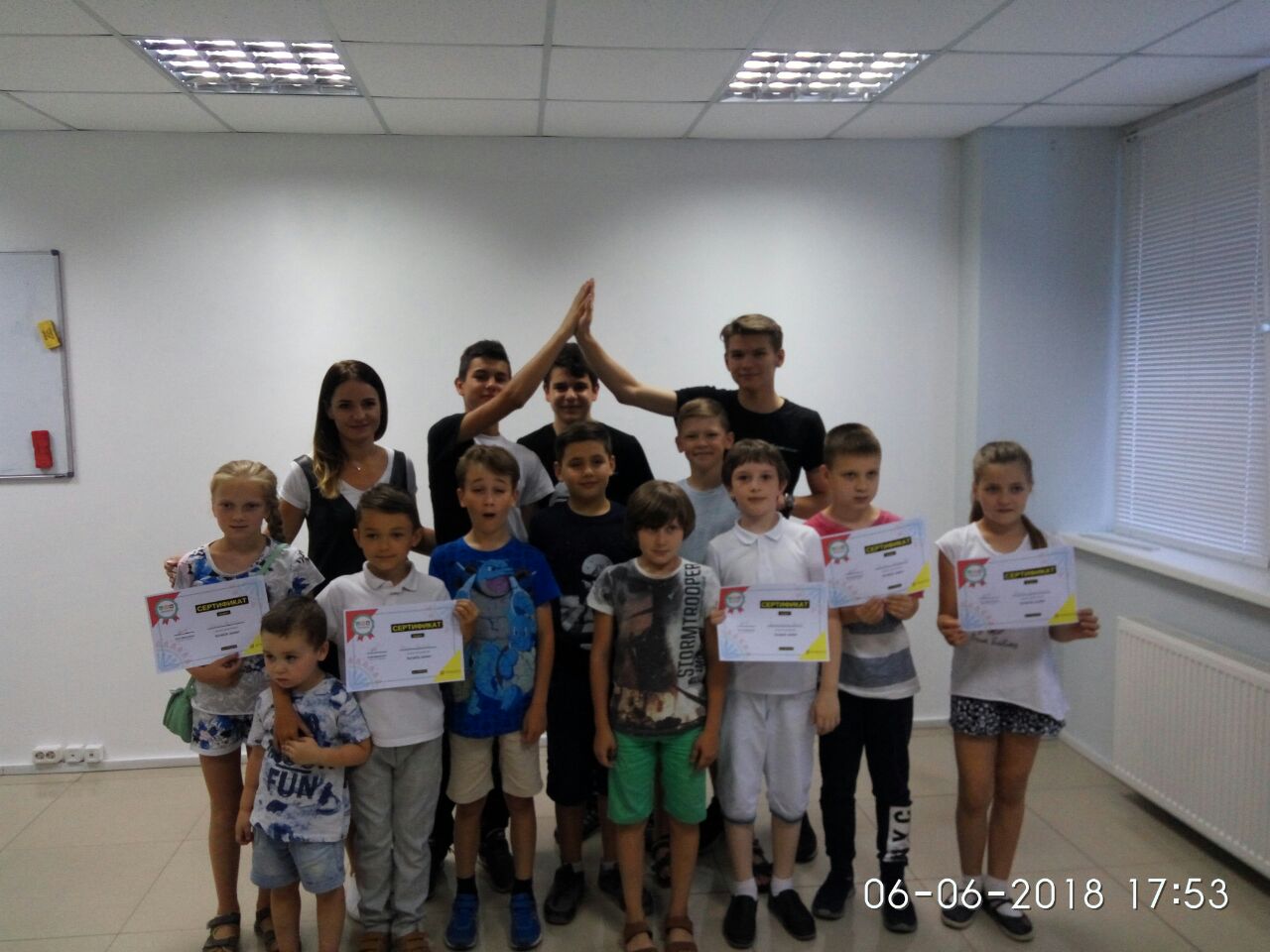
My own mentorship journey began almost immediately after my time with Vadym and Ihor in IT2School. It was the only logical next step: I wanted experience, but the law - in its infinite wisdom and impeccable timing - forbade me to work in any commercial company. So if I couldn’t be officially employed yet, I could at least help my own mentors teach the next generation of kids. That’s how the whole “student-to-students” model was born.
The idea was ridiculously simple. An adult professional has a horizon so far removed from a teenager’s that their mental universes barely overlap. Which means: if a student roughly the same age explains things to other students, all those abstract concepts can be wrapped into compact, relatable analogies, because everyone speaks the same native dialect of Confusion-and-Optimism.
Now, a skeptical reader might clutch their pearls: “Children teaching children? What is this - pedagogical anarchy? What could they possibly know?”
Relax. Deep breaths. The system worked because behind us there was always the “Watching Eyes Effect”
- a quietly observant adult mentor sitting in the corner, radiating the silent authority of someone who can intervene but chooses, mercifully, not to. It’s the same psychological mechanism the evolutionary anthropologist Dominic Johnson described when writing about Hawaiian totems silently supervising human behavior. Whether it’s spirits, statues, or a mildly tired software engineer - supervision is supervision.
For me, this whole “student-to-students” chapter became foundational. Freedom, recognition, support, and that sudden, luminous sense of belonging to something bigger than yourself - all of it set the bar impossibly high for any future workplace, and frankly, for myself. It taught me that quality and dedication are not marketing slogans but a way of living.
From that moment on, mentorship and professional development marched side by side, inseparable, like two old friends who argue constantly but never part ways.
Results and AI
At this point, I’ve accumulated five years of mentorship experience, having worked - entirely pro bono - with 153 students aged from thirteen to twenty-two (and yes, there were cases where the mentee was older than the mentor; life enjoys a little comedy). They came from different countries, with different backgrounds, and different assumptions about how computers work - most of them wrong, but charmingly so. My main directions were basic digital literacy, programming fundamentals, and solving applied problems using mathematics and code.
What I gained from all this was the ability to listen, to structure my own experience, and to smooth out complex ideas into simple, digestible analogies - gradually increasing the level as goals were reached. My unexpected superpower became translating complicated engineering concepts into human language. Essentially: I became a technical interpreter for Homo Confusus.
And meanwhile, the world has been shifting under our feet. Artificial intelligence has entered the stage - and not quietly. It can personalize everything, explain anything in plain language, generate analogies that fit your situation like a tailored suit. In this new era, where facts are synthesized faster than you can blink, the mentor’s role changes dramatically: it moves away from simply delivering ready-made knowledge and toward cultivating systemic thinking.
Because that - the ability to reason, verify, and connect long-term implications - is the one thing the machine cannot do for you. Systemic thinking is a meta-skill, a cocktail of logic, critical judgment, and the elusive but essential common sense. It’s what allows a mentee to separate truth from noise and meaning from trivia.
A mentor today is, above all, a guide into wisdom and context, two commodities the machine can mimic but not manufacture.
In other words: knowing how to solve tricky problems or write algorithms is no longer enough. AI can already spit out prototypes, drafts, even semi-functional apps. But to get something genuinely useful out of it, you must know how to ask questions that are precise, logically sound, and critically framed.
AI is not a sage. It’s a mirror. It reflects the structure of your thinking - or the lack of it.
And that, for now, remains a privilege of Homo sapiens, for however long we keep our act together.
Conclusion
Let me say this plainly, before we all get sentimental: in this life, the only free cheese is found in a mousetrap. If your learning path suddenly feels miraculously easy - effortless, frictionless, almost floating - then congratulations, you’re no longer on a road. You’re on a very convincing illusion of a road. And that is exactly the moment to stop, look around, and ask yourself what went wrong - preferably before the illusion starts charging rent.
No one - let me repeat, no one - can teach you something you don’t actually want to learn and aren’t willing to work for. Other people can point in a direction, gesture at the horizon, draw a squiggly line on a napkin and say, “Roughly over there.” And they’ll often be wrong, because such is the human condition.
But walking? Ah, walking is always on you.
A mentor may hold the lantern, but the legs - those are strictly your department.