
Leo Vaychik
Open to workSystems & Data Engineer
I design dependable data & compute systems around hard real-world constraints.
Most engineering problems aren’t solved by adding more moving parts, but by understanding the constraints that actually matter. I spend a lot of time with the fundamentals — how data moves, where bottlenecks hide, and why systems fail under stress.
I love the puzzle and the craft of building things from the ground up, but I don’t care for complexity for its own sake. The point of technical depth isn’t to show off machinery. It’s to cut through the noise, build on solid foundations, and make something people actually want and rely on.
Currently exploring roles across Systems, Data, Backend, and Platform & MLOps engineering.
Projects & Artifacts
Kraton
Person-centered software execution platform: verified reusable functions, signed contracts & deterministic DAG flows.
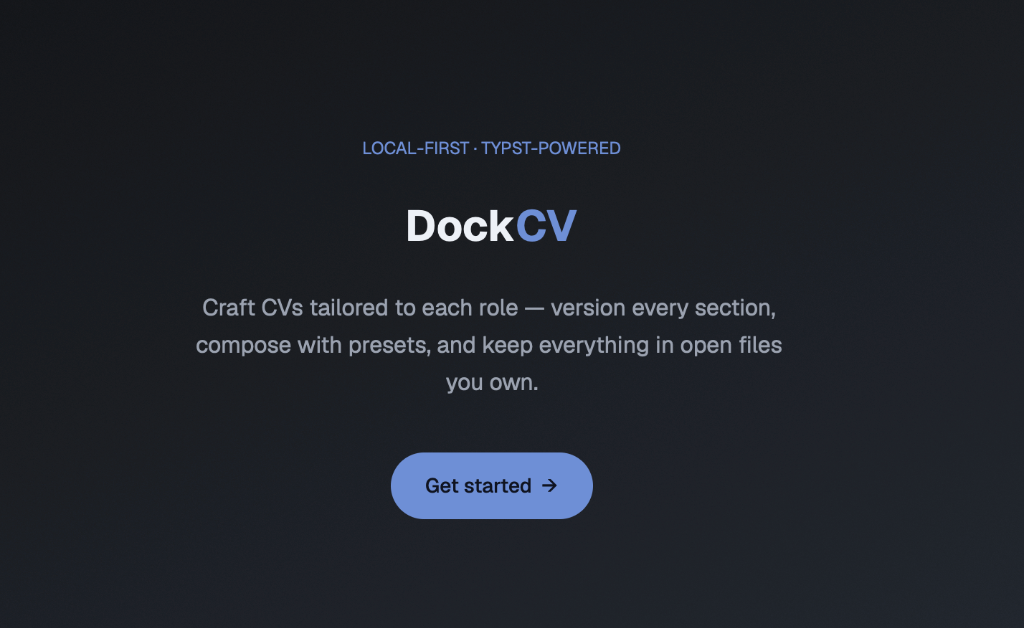
DockCV
Local-first résumé workbench: native GPUI + Typst compiler, offline TOML vault & win diary.
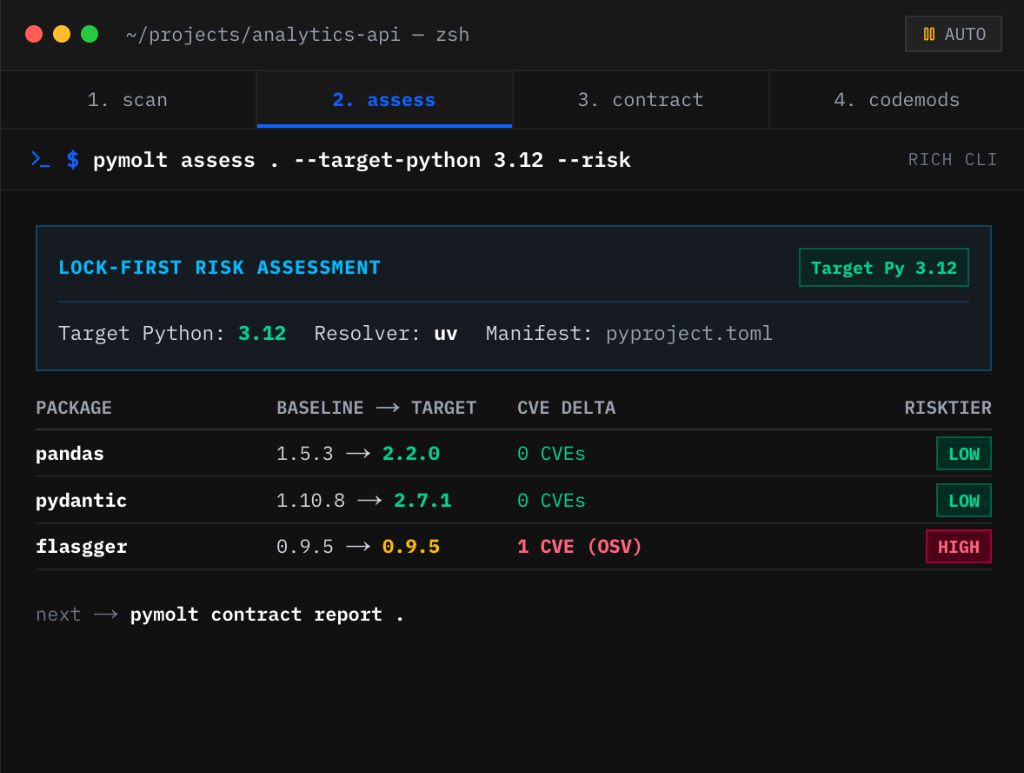
PyMolt
Python migration runtime tracing & behavioral diff engine for zero-breakage upgrades.

Elliscope
Autonomous hybrid airship HAPS — sensor fusion, telemetry, control systems.
Articles & Essays
View all articlesTraffic Flow on a 1D Ring: NaSch and LWR Models
Microscopic Nagel–Schreckenberg cellular automata and macroscopic LWR PDE modeling of non-equilibrium traffic flow dynamics.
Migrating Five Python Services: What It Actually Looks Like
Migrating five Python services across versions is not a version bump — it is a research project. Tools like pyupgrade and LLM agents handle syntax but miss behavioral changes that only surface at runtime. Pandas v1→v2 and Airflow v2→v3 show why testing strategy matters more than tooling.
A Guide to Being Understood or How Speak with People
Every professional term is a compressed suitcase—throwing it at someone is like hitting them with a brick. The t-IAR method (Image, Action, Role) turns complex jargon into clear understanding. Simplifying your language is not dumbing down; it is a profound sign of respect.
My Path in Mentorship: From Those Who Guided Me to Those I Guide
This is a short story about how I ended up where I am now. Not about magical mentors who “change your life,” but about ordinary people who once just said the right words and asked the right questions. About how mentorship can be uneven, funny, sometimes strange - and still work, because it makes us a little braver and a little more honest. And about how no technology can replace a human gaze that sees in you something you haven’t yet managed to see yourself.
Static Systems Are a Myth: Even Your Cache Lives
Mathematical stability analysis and dynamical systems modeling of Redis cache eviction limits and Celery queue thrashing under high load.